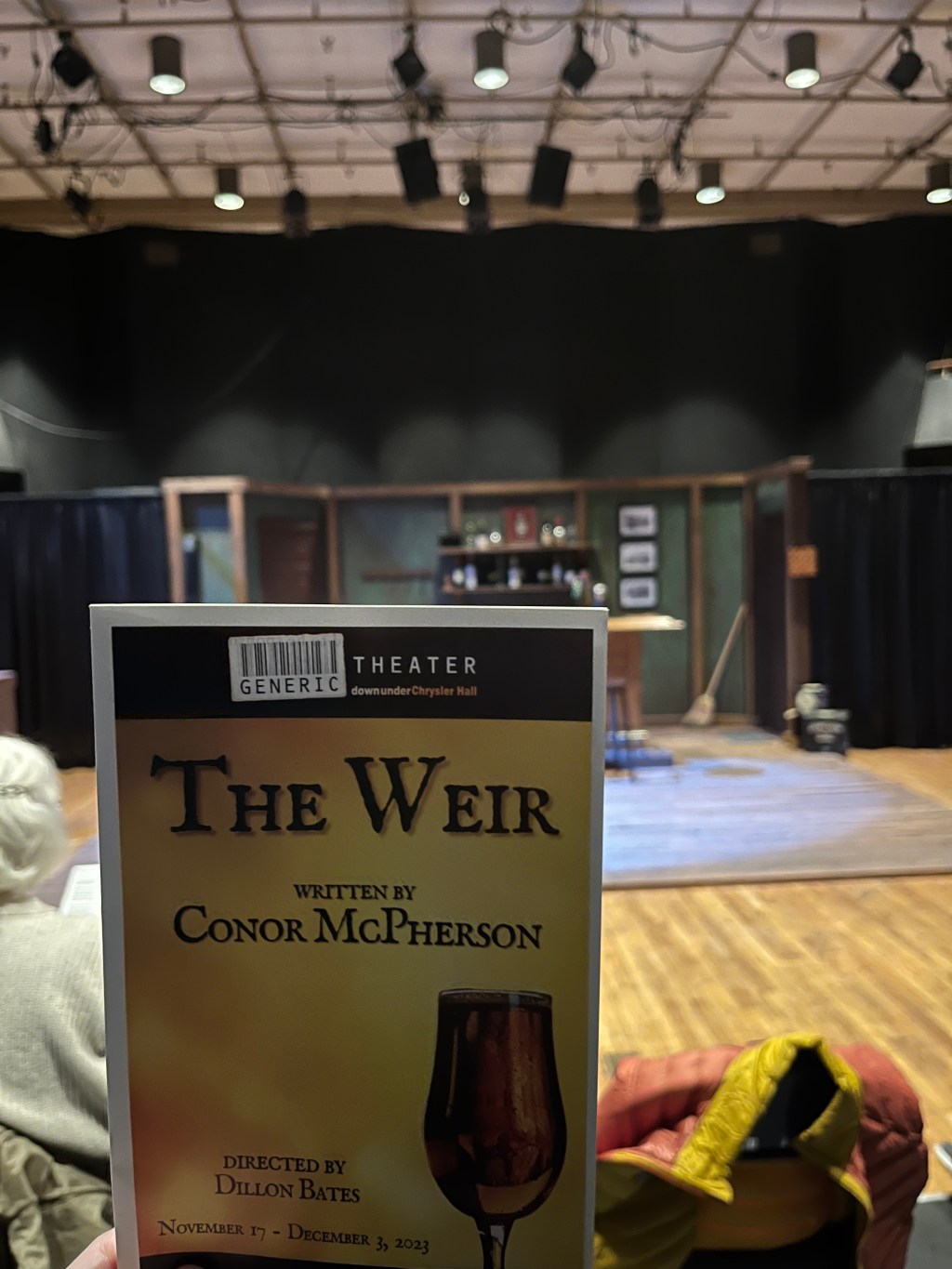
On Friday night, we “put the head in” the Irish bar built onstage at the Generic Theater to see their production of The Weir. This play begins with Jack (played by Tom O’Reilly) walking into the bar, noticing Brendan (the barkeep, played by Lawrence Nichols) is not there, and proceeding to pour himself (and pay for) a drink. This little scene immediately gives you the feeling that you are in a safe and trusting place, strange for those of us who grew up in urban or suburban areas, where despite their differences and bickering, the cast of characters are genuinely looking out for each other.
Brendan shows up and engages in conversation with Jack, and soon enough their fellow barfly Jim (John Cauthen, proudly performing in his 100th show over the last 19 years) shows up as well, and they talk about an interesting sight in town today. That interesting sight? Their old pal/rival Finbar Mack, who moved away from the countryside and into town, was seen driving around with a younger woman, showing her the sights. And, right on queue, in walks Finbar (with a flourish that James McDaniel 5th provides to the role), along with this younger woman not from the area, who is introduced to the group as Valerie (played by Destiny Deater).
The men jovially jockey and give each other a hard time, but (mostly) in good fun, and this is very natural – the audience can feel that there is history between them in how they interact, how they look out for Jim and ensure he isn’t paying for anyone else’s drinks (he seems to be the hardest-up), and how they poke each other, knowing the limits of where they can prod and what goes too far. This can be a hard dynamic to portray, but this cast gets it just right. They then proceed to convince each other to share stories with newcomer Valerie about their own or the town’s past, and Jack, Finbar, and Jim each take a turn. Each of O’Reilly, McDaniel, and Cauthen show their strengths as storytellers, able to command the stage on their own and keep the audience rapt with attention.
Once each of the three men have told a story, Valerie feels comfortable enough to give her own tale of why she has ended up here in the countryside. Deater gives a riveting and devastating rendition of her recent troubles, which will undeniably move the audience and the other actors as well. Jack then tells one final story about his past as the evening winds down (and each of the actors finish up their drinks – which, by the way, each actor probably drank 3-4 or more glasses of various colored beverages on stage – their bladders deserve credit for being so strong for an hour and 45 minutes of drinking on stage with no intermission).
Each of the five main stories told in this play shows some amount of loneliness within the teller, and by sharing these stories with each other, the play is making a point about the importance of “found family” and how storytelling, even about darker days of your life, can bring comradery. The comradery being so obvious and easy on stage between this particular cast is key to getting that point across, and is a credit to director Dillon Bates staging the play in a way to show that so clearly. In addition, each story has some element which seems potentially fictional, or just “in the head” of the storyteller. That element is the hardest thing for each actor to portray – how do you tell a believable story on stage, but also in a way that shows the audience that you don’t necessarily believe every element of your own story. That takes some real skill, and each member of the cast here successfully pulls off that trick. And – those things that you (and the storytellers) don’t necessarily believe were real – they each have real consequences in the lives of the storytellers. And that, I believe, is the real message of this play – that storytelling, even if partly fictional, is powerful, can provide inspiration, and change people’s lives.
 HRACT Awards